RTS Link Johor Bahru to Singapore: Traveller Guide
If you cross between Singapore and Johor Bahru regularly, you have probably already heard about the Johor Bahru to Singapore train everyone is waiting on. The RTS Link, connecting Woodlands North in Singapore to Bukit Chagar in Johor Bahru, is targeted to start passenger service around the end of 2026, cutting a crossing that can take hours during peak Causeway traffic down to about five minutes on the train itself. Before you start planning trips around it, it helps to separate what is confirmed from what is still pending, since fares, exact opening dates, and full operating hours have not been finalised yet. Here is what travellers actually need to know.
What Is the RTS Link and How It Works
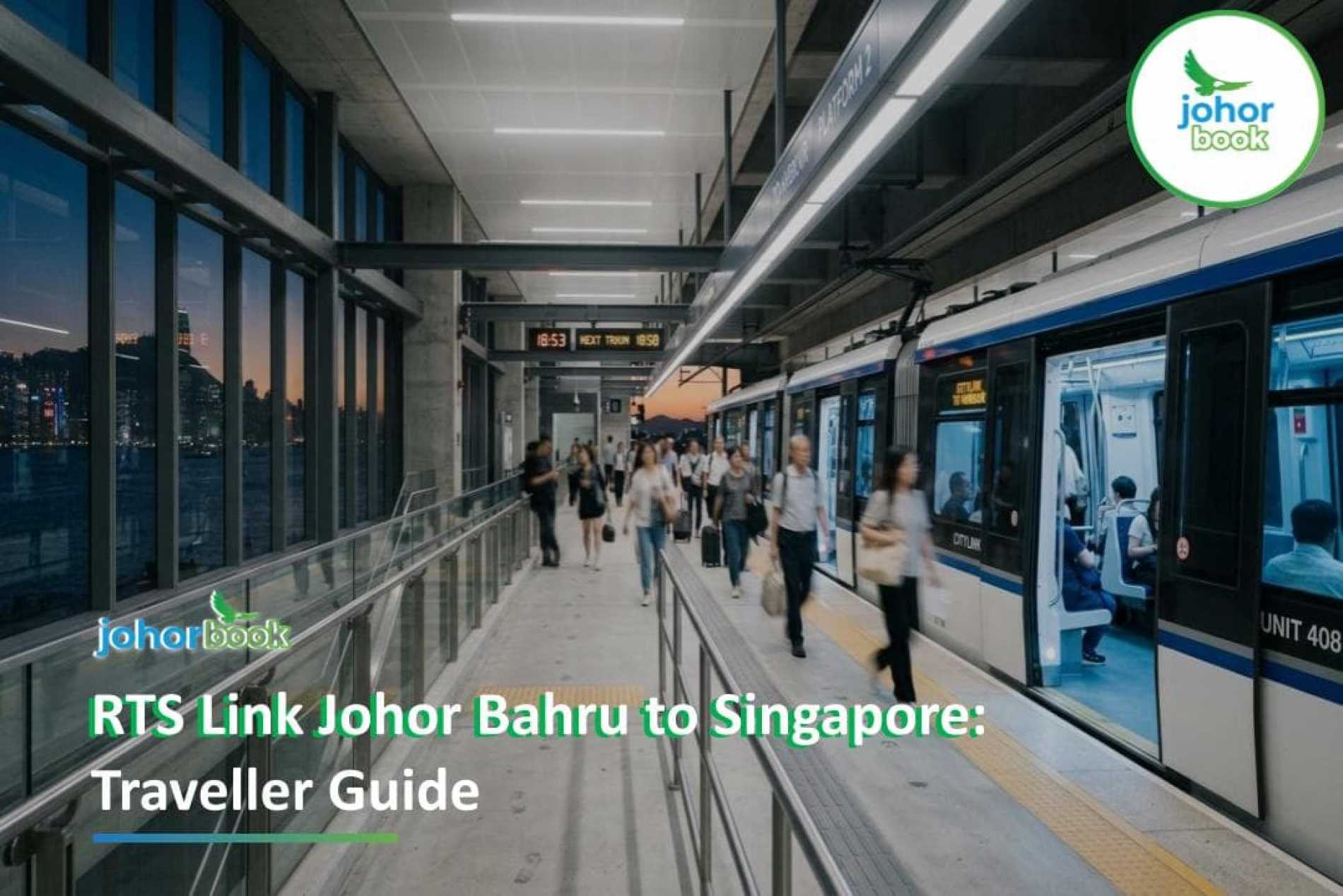
The RTS Link is a four kilometre cross border rail line built specifically to connect Singapore and Johor Bahru without requiring a car, bus, or the existing KTM Shuttle Tebrau train. It runs on a standalone light rail system using driverless four car trains manufactured by CRRC Zhuzhou Locomotive, separate from Singapore's MRT network and Malaysia's regular KTM lines, even though the Woodlands North station connects underground to the existing Thomson East Coast Line for onward travel within Singapore.
The system is designed to carry up to 10,000 passengers per hour in each direction, with early ridership projections around 40,000 passengers a day once it opens, a figure that could grow toward 140,000 as more commuters shift away from the Causeway. For context, that is a meaningful slice of the roughly 300,000 people who already cross the border daily by other means.
RTS Link Stations: Bukit Chagar and Woodlands North
There are only two stations on the entire line, which keeps the system simple compared to a full metro network. Bukit Chagar station sits in central Johor Bahru, close to City Square Mall and within walking distance of the Johor Bahru city centre, while Woodlands North connects directly to Singapore's existing MRT system at the basement level of the Thomson East Coast Line station.
The actual train journey between the two stations takes about five minutes, since the distance is only four kilometres across the Straits of Johor on an elevated viaduct roughly twenty five metres above the water. That short distance is the entire appeal of the RTS Link, since it replaces what can be a multi hour Causeway crossing with a ride shorter than most people's daily commute to work.
When Will the RTS Link Open
As of now, the RTS Link is targeted to begin passenger service around the end of 2026, a date referenced in Singapore's Parliament during discussions on the Cross Border Railways Bill. Construction has passed the halfway mark on both sides, with Bukit Chagar station structurally complete and systems testing underway, but some reports have flagged the possibility of the launch slipping into early 2027 as final testing continues.
If you are planning a trip specifically around the RTS Link opening, it is worth building in a buffer rather than locking in plans the moment a date is announced. Opening dates for major cross border infrastructure projects shift more often than not, and this one has already been delayed multiple times since the project was first signed off in 2020.
RTS Link Fares and Immigration Clearance
Two of the most practical questions for travellers, how much a ticket costs and how immigration will actually work, are also the two areas where details are still being finalised.
How Much Will a Ticket Cost
Malaysia's Transport Minister has indicated fares will likely sit somewhere between S$5 and S$7 per one way trip, which converts to roughly RM15.50 to RM21.70. That figure has not been locked in, and the operator, a joint venture between Malaysia's Prasarana and Singapore's SMRT, has said the final pricing will only be confirmed later in 2026.
For comparison, driving across the Causeway currently costs around RM20 in toll charges alone before accounting for Singapore's vehicle entry permit fees, which are set to rise further from January 2027, so the RTS Link is expected to work out cheaper than driving for most single travellers even once fares are confirmed.
Clearing Immigration at a Single Checkpoint
One of the more useful design choices is co-located Customs, Immigration, and Quarantine facilities at each station, meaning you clear both Singapore and Malaysian immigration at your departure point rather than queuing twice.
Bukit Chagar is expected to house around 100 AI enabled e-gates using QR code passport clearance, with security screening lanes and baggage scanners built in, aiming for clearance times of around seven seconds per passenger. Whether that holds up under real world peak hour crowds is something that will only become clear once the system is actually running.
RTS Link vs the Causeway and Second Link
For travellers who currently drive across the border, the RTS Link is not really a replacement so much as an additional option, particularly for anyone travelling without a vehicle or without much luggage. The Causeway and the Second Link at Tuas remain the practical choice if you are bringing a car into Johor, since the RTS Link only carries passengers and their hand luggage, not vehicles.
Where the RTS Link genuinely changes things is for day trippers and short stay visitors who do not need a car for their entire visit, since it removes the uncertainty of Causeway traffic entirely. Anyone planning to explore beyond central Johor Bahru, whether that is Puteri Harbour, Desaru Coast, or Kota Tinggi, will still need ground transport once they arrive, since the RTS Link only gets you as far as Bukit Chagar station.
What the RTS Link Means for Your Johor Bahru Trip Planning
Once the RTS Link is running, the most likely shift is for short, spontaneous trips, the kind of visit where someone decides on a Friday evening to head over for dinner or a weekend without wanting to deal with car logistics both ways. For those trips, arriving at Bukit Chagar and walking straight into the city centre removes a lot of friction that currently exists.
Longer trips, family outings, or anything involving multiple stops across Johor still benefit from having a car once you land, since public transport options outside the immediate city centre remain limited in the evenings and thin out further the moment you head toward attractions further out.
Getting Around Once You Arrive in Johor Bahru
The RTS Link solves the border crossing, not the rest of your day. Once you step off the train at Bukit Chagar, getting to Puteri Harbour, Desaru Coast, Kota Tinggi, or even a hotel outside the immediate city centre still depends on a car, taxi, or ride hailing app, and availability of the latter two thins out during busy periods.
A Johor Bahru car rental picked up shortly after arrival gives you that flexibility without adding a second border crossing to your day, and pickup points already exist close to the city centre alongside Senai International Airport and JB Sentral. If your trip includes attractions like the Brooklyn Cruise at Puteri Harbour or the Firefly River Cruise in Kota Tinggi, having your own transport from the moment you arrive makes the rest of the day considerably easier to plan around.
Planning Your Journey to Johor Bahru After the RTS Link Opens
The RTS Link is worth watching, but it is not something to build an entire trip around just yet, since fares, exact opening dates, and full operating hours are still pending official confirmation. What is already clear is that it will make short, car free trips into central Johor Bahru significantly easier once it launches, while longer visits that involve multiple attractions will still benefit from ground transport.
Whether you are crossing by road today or by train once the RTS Link opens, having transport sorted before you arrive makes the rest of the trip easier to plan around. You can line up a Johor Bahru car rental with JohorBook in advance, with pickup available near Bukit Chagar, Senai International Airport, and JB Sentral, so it is ready and waiting the moment you land.


Featured Post

Recent Post